
Heating a Pool House in Winter: Mini-Split or Unit Heater?
Heating a pool house for a home gym or guest room means keeping it comfortable whenever you're using it. In an empty building, the priority may be keeping the plumbing above freezing.
For most pool houses the choice is between a ductless mini-split and a unit heater. Which one suits yours depends on the building, what's stored in it and whether there's a gas line available.
Decide What the Heat Needs to Do
If you'll use the space regularly, you'll want steady heat and probably cooling in summer as well. If the building will be empty, the heat only has to keep the plumbing from freezing, but it needs to do that for weeks without anyone checking on it.
If nobody will use the building until spring, you may not need heat at all. Having the plumbing drained with a pool house winterization lets you leave the building shut down for the season.
Check the Insulation Before Choosing a Heater
Many pool houses were built for summer use and have little insulation. Sealing air leaks and adding insulation reduces how much heat the building needs, which can mean smaller equipment. The Building America Solution Center's mini-split guide covers this and recommends a load calculation for the space being heated.
Ask the installer how the equipment will be sized. A load calculation takes the building's insulation, windows and layout into account. Equipment that's too large costs more to buy and can switch on and off more often than it should.
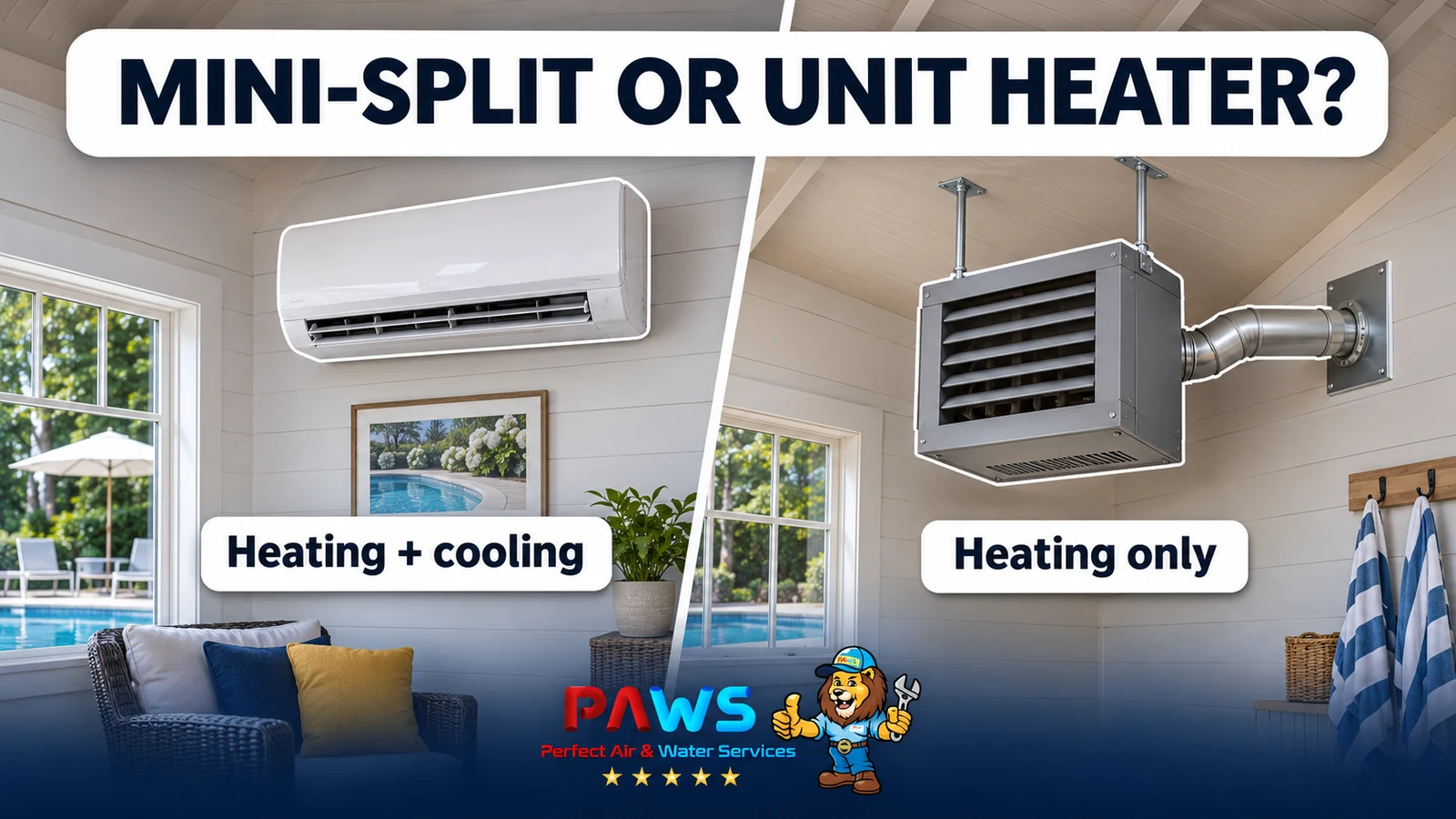
Ductless Mini-Splits
A ductless mini-split has an outdoor unit connected to one or more indoor units mounted on the wall. It doesn't need ductwork, and it cools as well as heats. ENERGY STAR's overview of ductless systems lists additions and outbuildings among the places they're used.
Ask the installer how much heat the proposed model delivers at low outdoor temperatures. Its rated size alone won't tell you whether it can heat your building on the coldest nights. ENERGY STAR's cold climate heat pump certification includes performance testing at 5 degrees Fahrenheit.
Ask where the outdoor unit will sit so it stays clear of snow, and where the water from its defrost cycle will drain.
Check how low the thermostat can be set as well. Some models won't hold a setting much below 60 degrees unless they have a low-temperature mode. That matters if you only want to keep an empty building above freezing. For a Mitsubishi Electric MSZ-GL unit, check the heating settings in its operating manual.
Unit Heaters
A unit heater is a heater with a fan, usually hung from the ceiling or mounted high on a wall. It's the type often used as a garage heater. Models are available for gas, electricity or hot water. A unit heater warms a space quickly, but it doesn't provide cooling.
A gas unit heater has to be vented to the outdoors and needs a supply of air for combustion. It also has mounting height and clearance requirements that may not suit a low ceiling. Modine's installation manual for a residential gas unit heater shows the kind of requirements involved. You'll need a gas line to the building and an electrical supply for the fan and controls.
Don't heat a closed pool house with a grill, a patio heater or any appliance that isn't vented outdoors. If the building has a gas appliance, install a carbon monoxide alarm. The CDC has more on preventing carbon monoxide poisoning.
If Pool Chemicals Are Stored in the Building
Tell the installer if chlorine or other pool chemicals are kept in the pool house. Heater manufacturers warn that chlorinated vapors and high humidity can corrode a gas heater's heat exchanger. You may need to store the chemicals somewhere else or choose a heater that draws its combustion air from outside.
The CDC's pool chemical safety guidance also says to keep chemicals away from heat sources and flames.
Which One Suits Your Pool House
A mini-split is usually the better fit if you'll use the building often, want cooling in summer or don't have gas at the building. A unit heater may suit a drafty building that's only used occasionally and needs to warm up quickly.
Have the installer check ceiling clearances, chemical storage and electrical capacity before you choose. These can limit which equipment will work in the building.
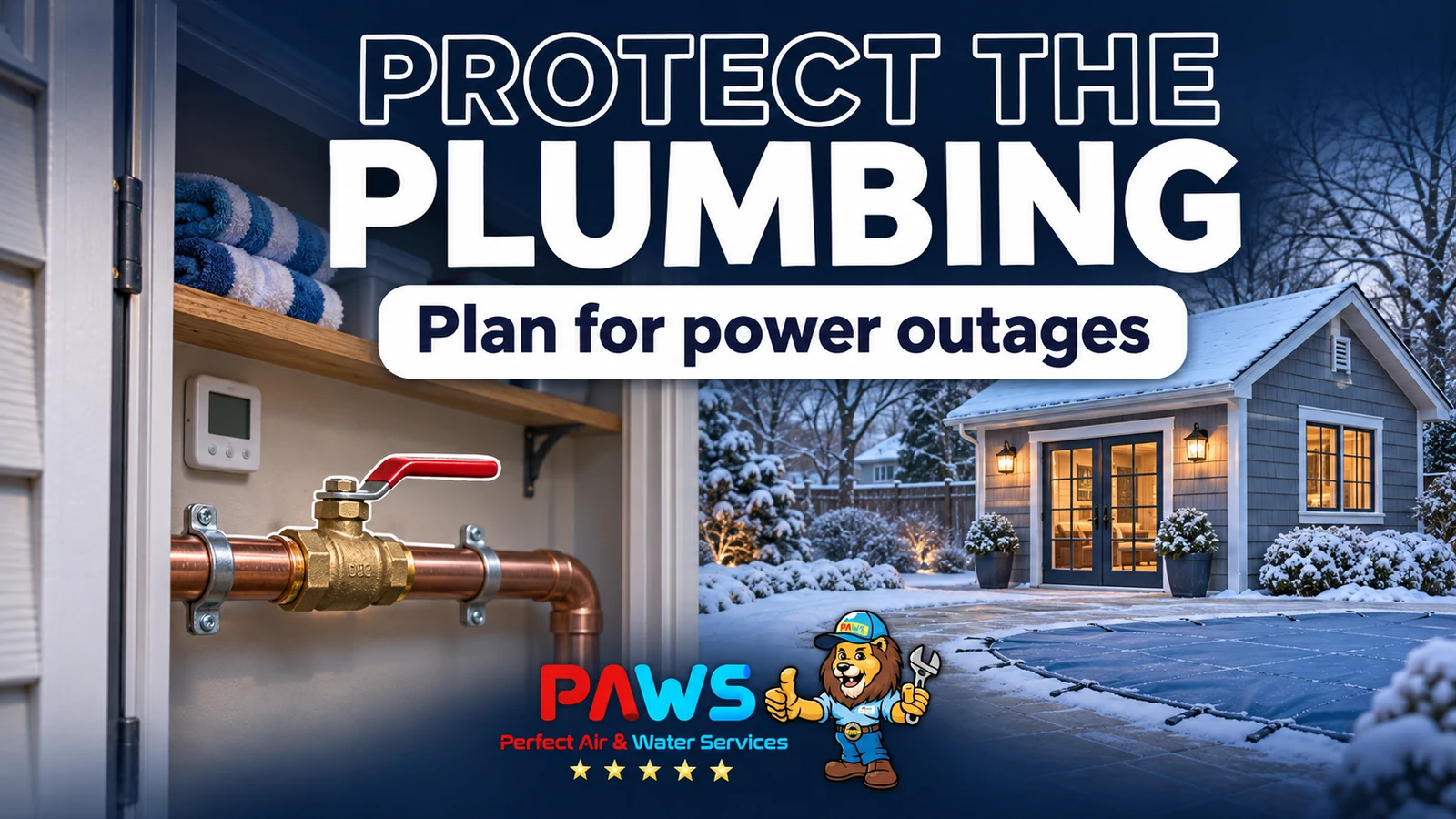
Heat Doesn't Protect Every Pipe
Heating a pool house protects its plumbing only while the heat is running. Both types of equipment need electricity, so think about what happens in a power outage. New Jersey American Water's winter tips suggest a thermostat setting of 55 degrees to help prevent freezing, along with a freeze alarm that can alert your phone if the temperature inside drops.
Pipes in an outside wall, under the floor or at an outdoor shower can be colder than the room. Ask to have those areas checked when the heating is planned. Our guide to keeping pipes from freezing has more on this.
Permits and Rebates
New heating equipment, gas piping and electrical circuits generally need permits under New Jersey's construction code. Ask the installer who will apply for them.
JCP&L lists rebates for qualifying mini-splits and heat pumps. Check with the utility whether equipment in a detached pool house is eligible before you count on one. The federal energy efficient home improvement credit isn't available for equipment installed after 2025.
What to Have Ready When You Call
The size of the building and what you know about its insulation.
How you plan to use it over winter.
Whether there's gas service at the building and space in the electrical panel.
Whether pool chemicals are stored inside.
Where the plumbing runs, if you know.
For help choosing a heater, call Perfect Air & Water Services at 888-578-2776 with the building details above. We install pool house heating in Freehold and surrounding towns in Central New Jersey.
Questions About Heating a Pool House
Will a mini-split work when it's below freezing?
A cold climate model is designed for it. Ask for the heating capacity at low outdoor temperatures before you choose one. A model selected mainly for cooling may not keep up on the coldest nights.
What temperature should I keep an empty pool house at?
It depends on where the pipes run. The room needs to be warm enough that pipes in outside walls or under the floor stay above freezing. If you'd prefer to turn the heat off, have the plumbing drained first.
Can I use a portable space heater?
A portable electric heater can take the chill off while you're in the room. It isn't suitable for protecting an unattended building, since it heats one area and won't run in a power outage.