
How Often Should An AC Filter Be Changed?
Why Is It Important To Change The AC Filter?
Why is it so important to check and change the AC filter? In a nutshell, skimping on changing the air filter is akin to the colloquial expression 'penny-wise and pound-foolish.' Routine AC filter maintenance provides a more durable, long-lasting AC system, improves household members' health by enhancing indoor air quality, and supports financial health with lower utility bills!
In the summer months, when heat waves bring outside temperatures to 100 degrees or more, and the home AC is running almost continuously, there is more air moving through the air filter, bringing an increase in air particles to clog the air filter faster and causing the HVAC cooling system to work harder, spiking energy costs by 5% to as much as 15%. The airflow restriction can also lead to overheating and costly equipment failure and repair.
A clean air filter allows your AC to operate at peak cooling efficiency and energy efficiency, as well as assisting all household members to enjoy:
- Healthy Body: air pollution is not just something outside of the home. Airborne debris in the home, such as pollen, pet dander, dust, and microscopic bacterial and viral particles, can cause an expansive range of respiratory illnesses. A well-maintained HVAC air filter in the heating and cooling system helps improve air quality and reduce illness.
- Healthy Mind: A well-maintained air filter eliminates sluggishness and headaches, and feelings of stress, anxiety, and depression. Quality air in the home allows for more restful sleep, with less nighttime congestion and sneezing. A restful 8 hours of sleep does improve brain health.
What Causes The HVAC Air Filter To Get Dirty?
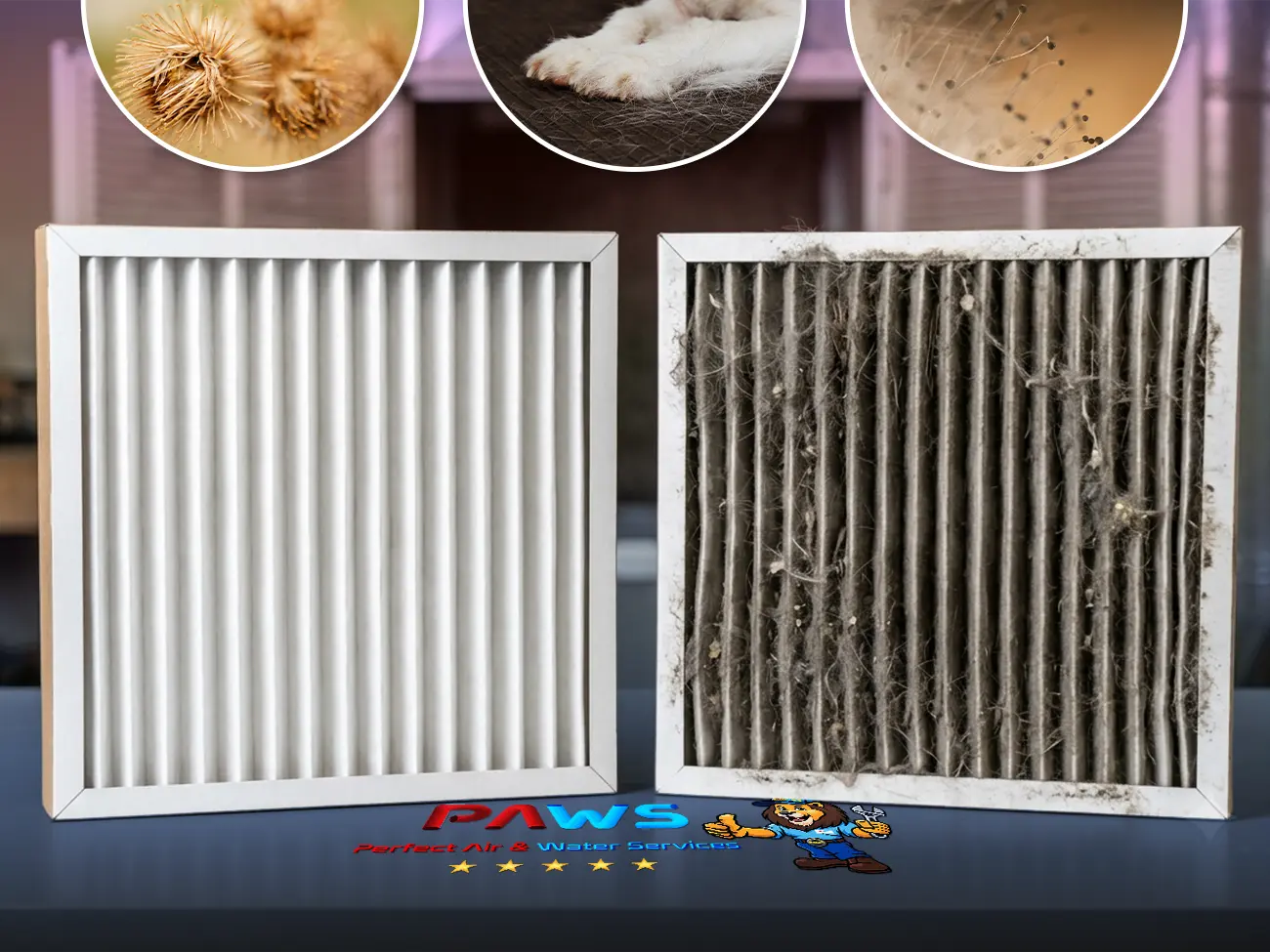
Whether the challenge in your home is seasonal pine pollen, pet dander, or microscopic dust, an air filter should meet the home’s air-purifying needs and be compatible with your HVAC system. If one believes all HVAC AC air filters are alike — think again! There are as many HVAC air filters as there are environments they serve — and those environments are what cause an HVAC air filter to get dirty, and why a consultation with a qualified HVAC technician is necessary if one finds the air filter getting dirty frequently.
When HVAC air filters get dirty frequently, the HVAC technician is the ‘go-to hero’ who can provide a solution!
The four common culprits for dirty air filters:
- Type of Filter Used: Home activities such as vacuuming, sweeping, cooking, or smoking, or a home’s location, such as a construction area, an area with high pollen, high humidity, or a dusty, dry climate, can mean more airborne particles the HVAC system pulls in and cause filters to become dirty. The filter type determines how fast it gets dirty with debris, dust, and allergens. Three common filters for the HVAC system include the 1-inch pleated air filter, washable, reusable air filters, used in high-traffic, high-airflow applications and do not need to be replaced, and the disposable air filter, composed of polyester, fiberglass, or other synthetic materials, is great for capturing small particles such as bacteria, mold spores, and pet dander. The HVAC technician can advise the best air filter and MERV rating for your specific AC cooling system.
- Leaky or Dirty Air Ducts: A major cause of frequently dirty air filters is a leaky air duct, especially in the return system, which loses conditioned air and acts as a vacuum that pulls in outside air from unconditioned spaces such as dusty attics, basements, and crawlspaces. The professional HVAC technician can clean and seal air ducts.
- Rover and Fluffy: Rover and Fluffy are certainly beloved family members, but their shedding fur and dander can make your air filter dirty faster. Recognizing this fact should motivate pet owners to perform preventative maintenance of their HVAC systems.
- Thermostat Setting: When the thermostat fan is set to ‘ON,’ rather than ‘AUTO,’ the indoor blower fan runs continuously, 24/7! Air is constantly circulating through the AC system, continually capturing dust, pet dander, and other airborne debris, even when the HVAC system is not actively heating or cooling the home. It is an 'easy fix' to set the thermostat fan to the 'AUTO' position to reduce airflow through the filter.
What Are The Common Signs Of A Dirty Air Filter?
Just as your body provides signs when it is not well and you seek help from a qualified medical doctor, your home's HVAC heating and cooling system provides signs of malfunction, including a dirty air filter. Only a trained and certified HVAC contractor can interpret the following signs to improve HVAC system performance:
- The 'see through' test: the obvious sign of a dirty air filter is holding the filter up to the light and testing whether one can 'see through' the filter. If an air filter can't pass the 'see through' visible test because it is coated with dirt and dust, change the filter.
- Weak airflow from vents: hold a hand in front of the supply vent, and if airflow feels weak compared to earlier in the season, check and change the air filter.
- The AC is blowing warm air: if the AC is blowing warm air from the vent and the thermostat setting is not reaching the temperature wanted for the room, check and change the air filter.
- More dust in the home and around vents: when the air filter is overloaded, it will not capture as many dust particles in the air. If you find more dust than usual on baseboards, vents, and furniture, check and clean the air filter.
- If household members have increased respiratory problems: sneezing, nasal drip, a continual runny nose, or coughing, check and clean the air filter.
- The HVAC system is running longer to cool (or heat) a room: if the heat or cool system cycles on and off frequently, or you hear 'odd sounds' from the system, check and clean the air filter.
- A lingering ‘odd smell’: a dirty filter may be the cause, and in need of changing.
How Often Should AC Filters Be Changed?
- Type of Air Filter: The economical 1-inch pleated, disposable fiberglass air filter is less efficient at capturing dust and dirt particles, and should be changed every 30 days or less, while a 1-inch synthetic pleated air filter can remain in your heat and AC cooling system 30 to 90 days, depending on the length of time the system runs.
- MERV rating: A higher MERV rating on air filters means the filter is denser and can restrict airflow. Higher MERV ratings trap smaller particles and improve a home's air quality, but the higher the rating, the more frequently the air filter should be changed. MERV ratings of 11 and 13 should be changed every 30 to 90 days, and more frequently in homes with pets and pet dander, or when home occupants suffer from pollen allergies or asthma. A MERV rating of 8 generally needs to be changed every 60 to 90 days. Consult a professional HVAC contractor for the best MERV rating for your system.
- Home Size: Larger homes circulate larger volumes of air, and subsequently capture more dirt and debris. A 2,500-square-foot home typically requires changing the air filter every 1 to 2 months with a standard 1-inch filter. While it might be thought that a medium-sized or small home or apartment of less than 1,500 square feet requires less frequent air filter changes because the filters in such HVAC systems are smaller, they still fill up quickly and should probably be changed every 1 to 3 months. For larger homes with larger HVAC systems, one might consider four-inch or five-inch media filters that need to be changed every 6 to 12 months. Media Filters do come in smaller sizes of 1-inch and 2-inch, requiring a change every 30 to 90 days or every 3 to 6 months, respectively.
- Home Lifestyle: While a standard 1-inch air filter should be changed approximately every 30 to 60 days, 60 to 90 days for a 2-inch or larger pleated filter, and 6 to 12 months for large Media Filters. More frequent changes may be required when there is the presence of one or more dogs in the home, shedding fur and dander; when there are home residents with asthma or seasonal allergies; when the home is near outside construction sites, busy roadways, a nearby wildfire, or if the home is located in an area of high humidity, the EPA (Environmental Protection Agency) recommends more frequent monitoring and changing of the HVAC air filter.
While it is easy to forget to change the HVAC air filter, remember: it is crucial to carefully monitor and replace it — especially in the summer months, when heat waves bring 100-degree temperatures, and the AC runs almost continuously to keep the home cool! More air moving through the air filter increases the likelihood that air particles will clog the filter more quickly, causing the AC to struggle to keep the house cool! With the struggle, an older AC will see parts and components wear down faster! Don't skimp; change the air filter frequently! Better yet, arrange for routine summer HVAC maintenance, so minor issues do not become costly major repairs!
Contact Perfect Air and Water Services (PAWS) — our trained, certified, and licensed technicians have the answers to all air conditioning issues of New Jersey homeowners and businesses, including plumbing! We offer same-day emergency response 24/7 and can answer any question you may have 24/7! Call us at 888-578-2776! PAWS technicians appreciate the opportunity to assist with and answer the HVAC and plumbing questions of all our NJ neighbors. Our technicians are dedicated to quality HVAC and plumbing services!