How To Choose A Boiler Repair Company In New Jersey
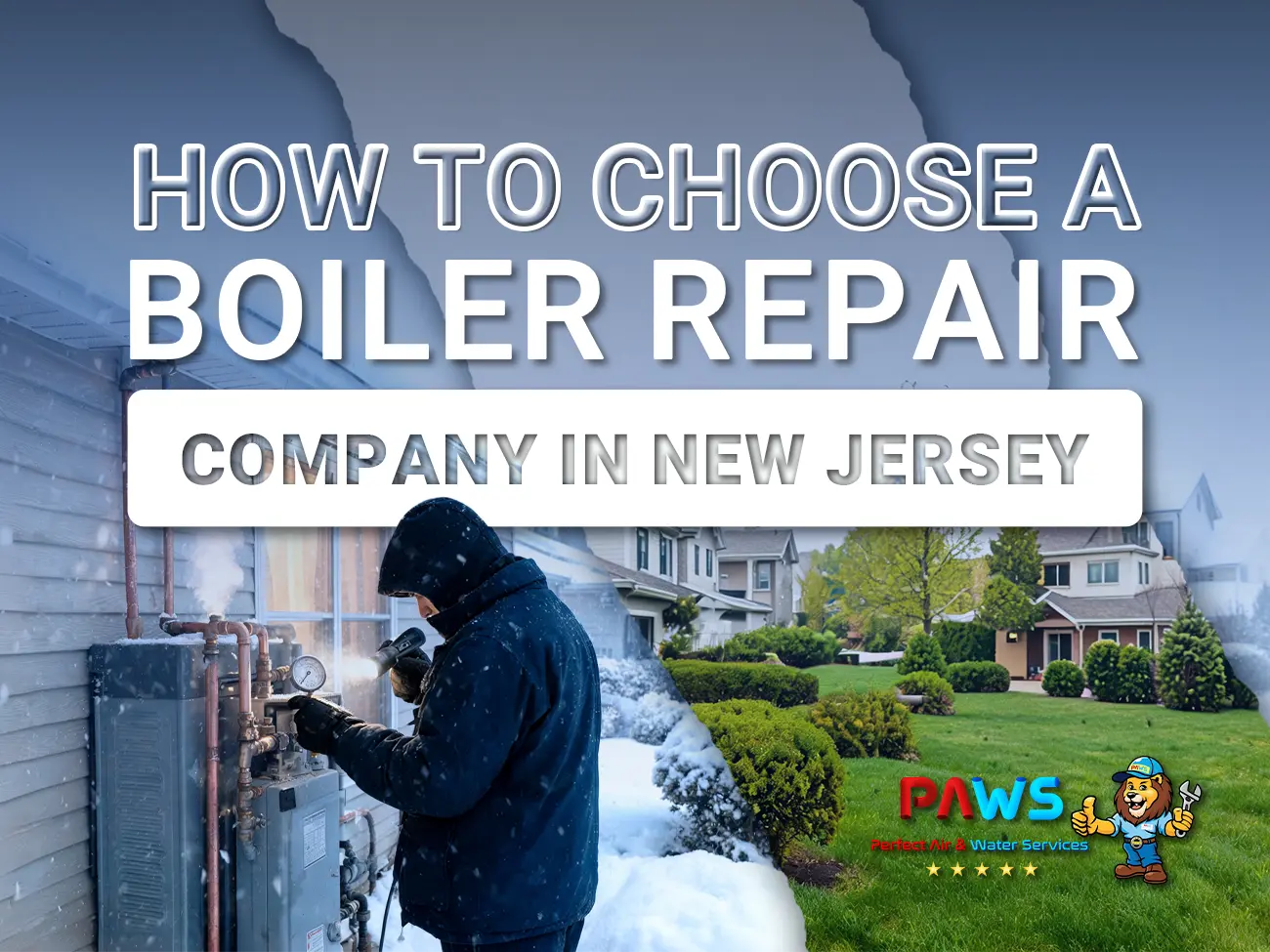
Eenie-Meenie-Miney-Mo, time to choose a boiler repair company, before the next NJ snow! Brrrrrrrrr – the NEXT snow? That's what weary homeowners in New Jersey might be heard saying after experiencing the historic sleet and snow and temperatures as low as 11 to 19 degrees, as well as the New Jersey Blizzard of 2026, February 22 and 23, blanketing New Jersey residents with up to two feet of snow in some regions! It was comforting for all NJ homeowners and apartment renters to hear their furnaces or boilers roar to life and send heat to every room of the house!
The complex nature of the hydronic steam boiler that brings warmth to a home or business on frigid winter days requires more than the eenie-meenie-miney-mo method of choosing a boiler repair company. A professional boiler repair company that prioritizes safety, reliability, and homeowner education will help ensure your home remains warm and secure throughout NJ winters. We hope this article provides the information you need to choose a NJ boiler repair company with confidence.
As explained in Questions To Ask When Choosing A Boiler Repair Company in various parts of the nation, a furnace operates using natural gas, propane, oil, or electricity to heat the air in the house, either by combustion or by electrically heating a heat exchanger or heating element within the furnace. These are known as forced air furnaces. Using a strong fan to pull air into the furnace, across the heat exchanger or heating element, the warm air is distributed to the rooms of the house via a duct system and vents or heat registers.
With a home heated by a hydronic steam boiler, the water inside the boiler gets heated from a fuel source of either oil or gas, changing the heated water to steam, which then escapes through pipes to the radiators in the rooms of the house.
NJ homeowners choosing a boiler repair company should choose a firm that can explain the various parts of the specific boiler heating system in their home. The essential parts are the burner, combustion chamber, heat exchanger, and the Aquastat, which senses the water temperature and tells the boiler when to start and stop. These and other parts of a boiler are explained in Questions To Ask When Choosing A Boiler Repair Company. The challenge for the skilled, licensed boiler repair technician is explaining the boiler parts of various home boiler systems in NJ homes. When selecting a technician, ask about their licensing, certifications, and experience with NJ-specific boiler systems to ensure you hire qualified professionals.
What Are The Common Boiler Systems Found In NJ Homes?
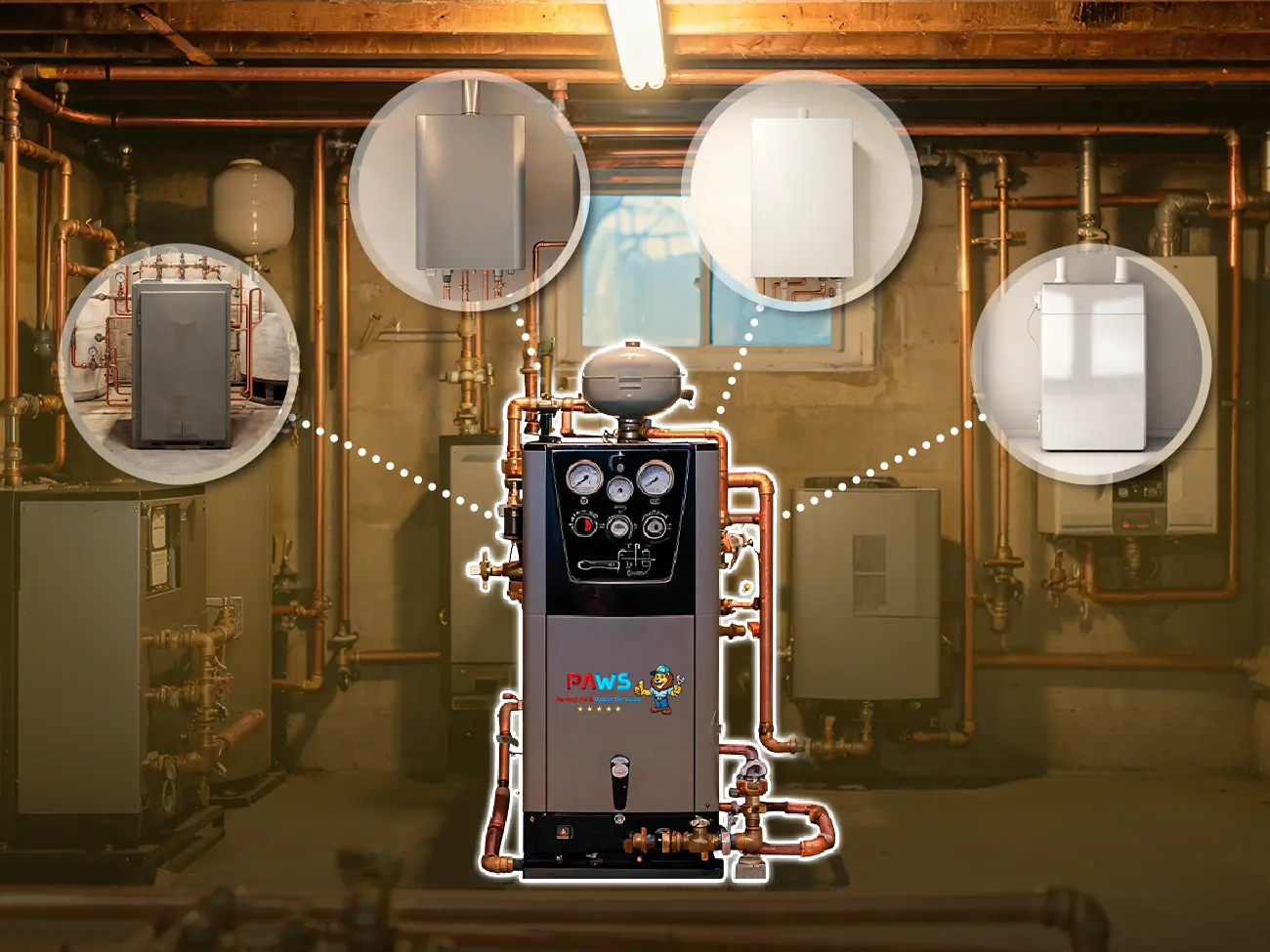
What a licensed, skilled, and experienced NJ HVAC boiler repair company technician can attest to in detail are the many home boiler systems they have worked on across the many NJ counties. To ensure you choose a reputable boiler repair company, check online reviews, ask for references, or verify their local reputation through community feedback, which can provide insight into their reliability and quality of service when handling various home boilers as:
- Conventional Boilers: The conventional boiler heating system includes a storage tank for the heating fuel, hot water cylinders, and a cold-water storage tank — an excellent boiler for large homes with high hot-water demand.
- System Boilers: Similar to conventional boilers, system boilers include a hot water storage tank within the boiler system to save space.
- Combi Boilers: These compact units provide both space heating and hot water in a single boiler system. Perfect for homes with limited space and low hot water demands.
- Condensing Boilers: These boilers are extremely energy-efficient as they recycle heat from exhaust gases. Condensing boilers can be combi or system boilers, and NJ homeowners may find lower heating bills with a condensing boiler.
- Electric Boilers: an electric home boiler system is usually in smaller homes or in rural areas where natural gas or oil fuel is not easily accessed.
What Are The Common Brands Of Home Boilers?
Among these home boiler systems, there are various name brands, each serving a specific purpose. Just a few of the home boiler brands found in NJ homes:
- Delta: The Delta Limited series residential and commercial hydronic steam boiler is a conventional boiler, manufactured by Raypak, capable of using propane or natural gas as a fuel source. It is a budget-friendly, high-performance boiler certified for indoor or outdoor use and easy to maintain. The Delta boiler line also has a Hi-Delta combi boiler option.
- Kohler: The Kohler boiler is an industrial electric heat boiler system designed to reduce carbon emissions by 90%. As a home boiler system, the Kohler system boiler can be a combi steam boiler, combining its steam generator series with fast-response hot water technology.
- Lennox: The Lennox hydronic boiler system is a home heating condensing system boiler, or a combi boiler system that provides space heating and hot water on demand. A Lennox boiler can be oil or natural gas.
- Lochinvar: The Lochinvar brand of boilers is made for both residential and commercial use and is a gas-fired condensing boiler system with a 97% energy-efficiency rating. They also offer combi boilers that provide both space heating and hot water from a single unit. Lochinvar boilers can also be conventional boiler systems or wall or floor-mounted heating systems.
- NTI: The NTI brand of hydronic boilers can be condensing, combi, or conventional home heating systems that are wall hung. They are light-weight, compact, and quiet, providing high energy efficiency.
- Ruud: Rheem is the manufacturer of Ruud boilers. The Ruud home boiler is a combi boiler that provides both space heating and water heating in a single unit. Small in size and energy efficient, providing hot water when needed.
- Weil-McLain: Weil-McLain is a conventional boiler, used by both residential and commercial businesses. The Weil-McLain boiler heating system uses natural gas, propane, or oil for its fuel source. There are also condensing combi boilers that produce heat and hot water.
Other boiler brands include Peerless, Burnham, Buderus, Viessmann, and Bosch.
Why Do Boiler Repair Companies Need To Understand The Local Weather?
In our blog article, How To Choose A Furnace Repair Company In NJ, we described NJ winter weather as temperatures ranging from low to mid-30 degrees, idling at 32 degrees. As stated, the winter of January and February 2026 will be long remembered for unusually cold temperatures and a blizzard that produced up to 2 feet of snow in some regions. NJ summers can exceed 90 degrees!
With knowledge of NJ weather variations due to the temperature fluctuations of the four seasons of NJ: winter, spring, summer, and fall, as well as working within different regions of NJ with a variety of home styles, the experienced and local boiler repair company technician can better assess if the home boiler system of a NJ home is meeting the homeowner’s heating needs efficiently, based on the following criteria:
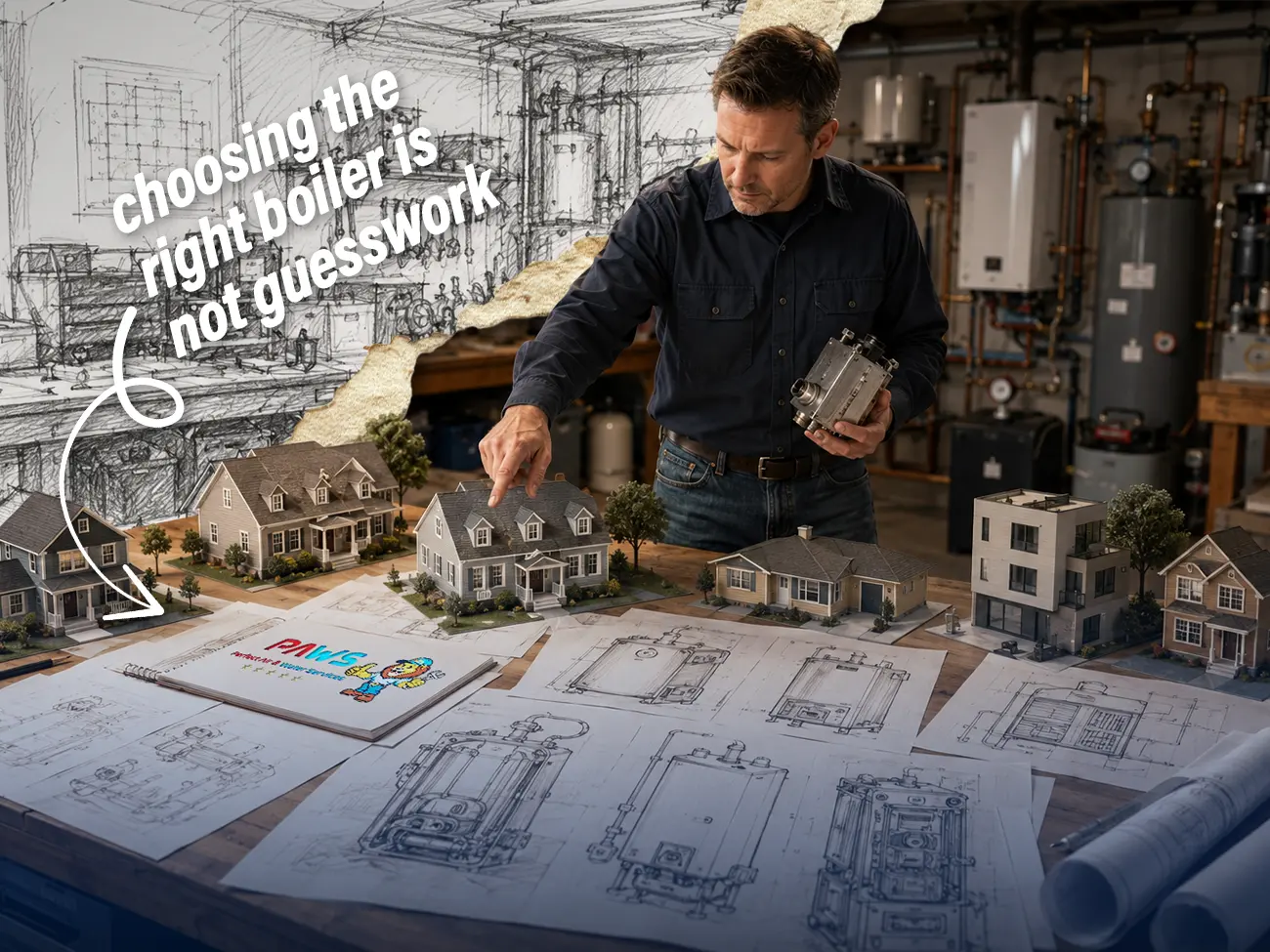
- Size of Home: a large NJ colonial home with a basement, first-floor living space, and 2nd-floor bedrooms, and with multiple bathrooms, would best be served with a conventional or system boiler to meet hot water demands. A smaller Cape Cod, split-level, ranch-style, or condo home may need only a combi boiler system.
- Hot Water Demand: the conventional boiler systems would be best for NJ homeowners with large families having greater demand for using hot water in multiple areas of the house, such as bathroom, kitchen, and utility/laundry room. A combi boiler might best serve households with only one or two people.
- Energy Efficiency: When the NJ home is newly constructed or where the homeowners are young, natural gas boilers are the homeowner's choice, as opposed to the oil-fueled boilers of older NJ homes owned by senior NJ residents. If the area is rural and oil or natural gas is unavailable, or if NJ residents are economically prudent, electric condensing boilers may be a better choice.
What To Seek When Choosing A Boiler Repair Company In NJ?
After reading this article on home boiler systems, we hope to impress upon readers that the boiler is more than a single unit that 'roars' at start-up when the home temperature falls below the thermostat setting. The home or commercial boiler is a 'system' of internal and external components that, when functioning properly, provide optimum efficiency! Sustaining that optimum efficiency requires an HVAC company with trained, experienced technicians!
As stated, choosing a NJ boiler repair company should not be a game of eenie-meenie-miney-mo — nor should anyone think an experienced, professional HVAC boiler repair company wants to play hide-and-seek! The experienced and professional HVAC boiler repair company is plainly open in showing or speaking of their:
Local Knowledge Of Service Areas: When winter temperatures are frigid (or summer heat is excessively hot) it makes sense to choose a NJ boiler repair company familiar with your home’s location — to ensure a fast arrival should an emergency arise. In addition, a local professional HVAC boiler repair company will comply with NJ licensing and insurance requirements, as well as all NJ regulations regarding the repair, servicing, or installation of home heating systems. Finally, the most important reason for choosing a local NJ boiler repair company is the personal connection of being a ‘NJ neighbor’ — known by your neighbors!
NJ Licensing and NJ regulations: When choosing a boiler repair company in NJ, don’t forget to ask to see the Master HVACR (Heating, Ventilation, Air Conditioning, and Refrigeration) contractor license issued by the NJ Board of Examiners, which is required to obtain permits to do HVAC work, perform the work, and to advertise the HVAC business. The applicant for such a Master HVACR license must be at least 21 years of age. Such a license application requires 5+ years of work experience or an education equivalent to a board-approved 4-year apprenticeship or a 2-year technical school program, as well as passing an exam for the Master license with a minimum score of 70%.
NJ regulations also require a minimum of $500,000 general liability insurance to cover possible property damage and bodily injury. Also, a $3,000 surety bond is required and submitted to the Board of Examiners to protect the client from financial losses from abandoned HVAC projects. All NJ HVAC companies are required to have 7 hours of continuing education, 4 hours of technical, 2-hours of business, and 1-hour of business ethics when seeking renewal of licenses biennially (every other year). Beyond the license, all HVAC companies must be registered with the Division of Consumer Affairs with a Certificate of Formation filed if setting up such NJ business. All company employees must be covered by workers’ compensation.
Experience With Boiler Systems and Brands: When choosing a boiler repair company in NJ, it is best to ask for the specialized NATE certification. (North American Technician Excellence) proving expertise in HVAC systems. A firm that speaks of its technicians receiving ongoing training from boiler manufacturers on varied brands such as Rheem, Weil-McLain, Delta, and Lennox is an excellent way to know they are interested in the work they do. The skilled and experienced boiler technician does not just fix the immediate problem but, as a matter of routine, conducts a pre-start inspection of all parts of the boiler — valves, pipes, circulator pumps, and all safety devices.
Care Shown By Providing Service Agreements: All quality-minded NJ HVAC contractors offer service agreements, also known as maintenance contracts, to ensure regular system checks to prevent emergency repairs and ensure greater energy efficiency. In NJ, such agreements will usually cover cleaning, parts calibration, and parts inspection. Be sure to discuss the system maintenance schedule. Typical service agreements provide maintenance every 90 days. As stated, the quality HVAC contractor does not play hide-and-seek; they should explain everything in a typical service agreement — if they do not, do not be afraid to ask!
Comprehensive Boiler Repair: When choosing a NJ boiler repair company for your home, be sure they offer comprehensive services that go beyond basic repair and include annual maintenance inspections, full system servicing (including cleaning the heat exchangers and burners), safety checks, and 24/7 365-day emergency repair. Such a boiler repair company should also perform boiler replacement and installation.
Perfect Air and Water Services (PAWS) appreciates the opportunity to assist all our NJ neighbors with our knowledge, experience, and skills to answer their HVAC and plumbing questions, and we are even more pleased knowing our neighbors appreciate our dedication to quality HVAC and plumbing services.